Hey everyone! It’s been a week since my last update. How have you been? I’m Kazu, and I’m glad to be back!
With that said, let’s jump right into today’s topic! 😊
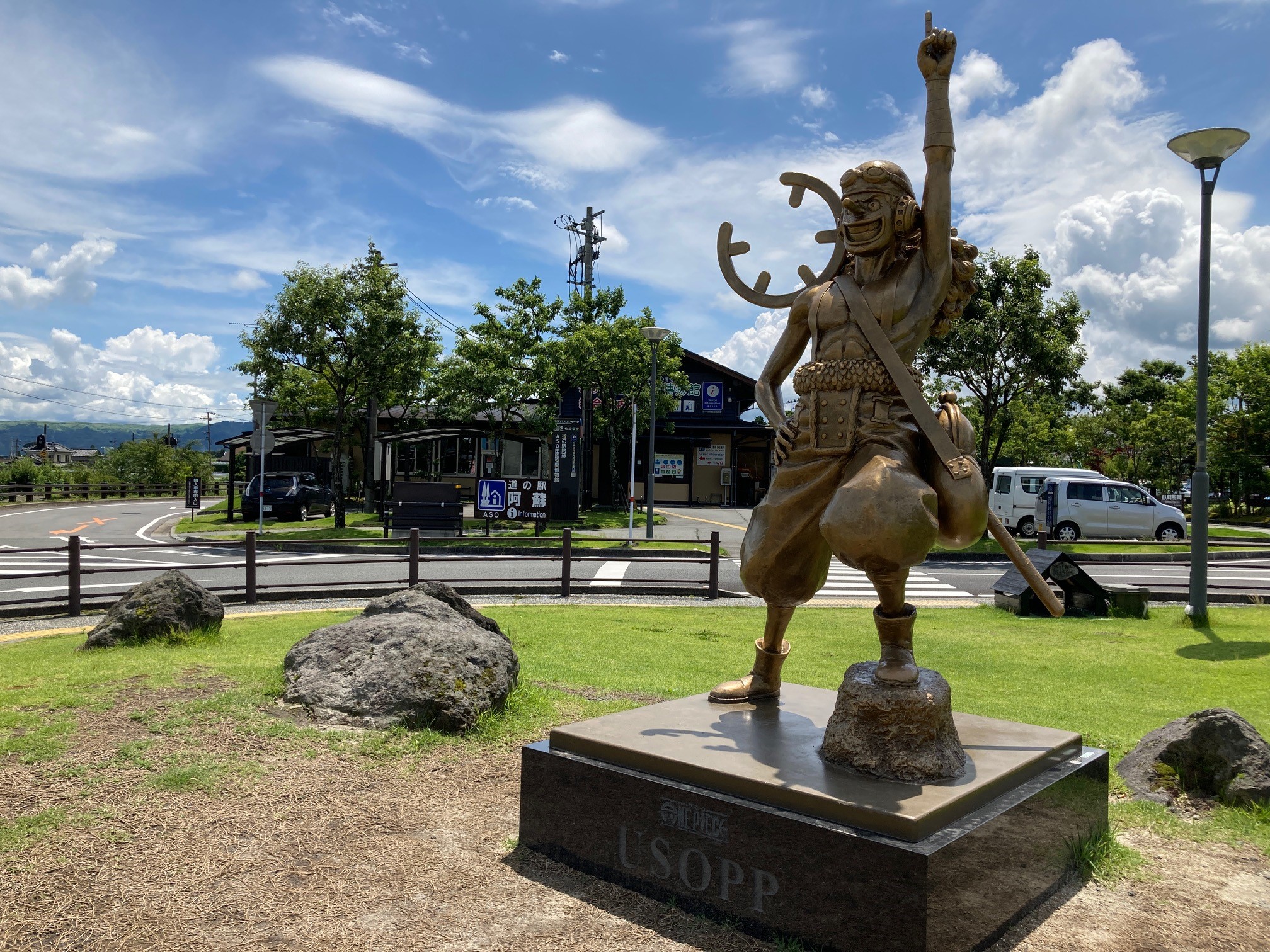
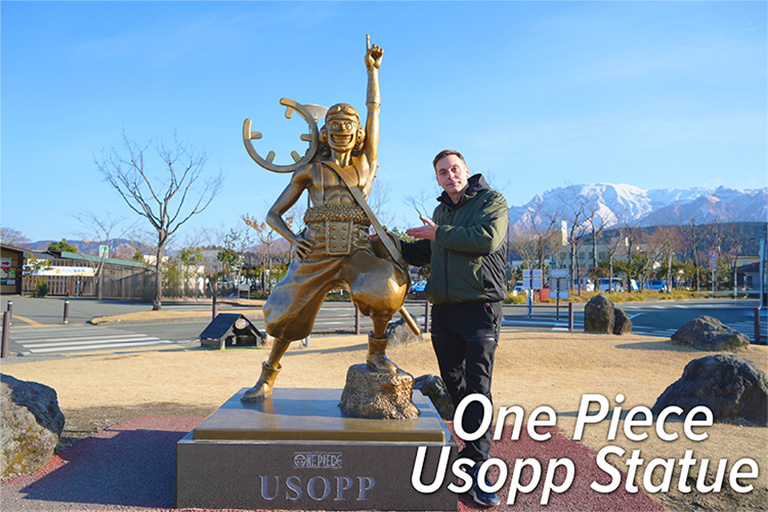
Despite the passage of time, many overseas visitors still make the long journey to Michi-no-Eki Aso in search of the Usopp statue from the popular anime “One Piece! “😊
Japanese anime, manga, and video games—often referred to as “subculture”—have become such a global phenomenon that they now stand at the very heart of the Cool Japan movement. Their popularity is far greater than many people imagine! 😲
So today, we wondered: Why is Japanese anime so incredibly popular around the world?
Out of curiosity, we decided to ask ChatPy (ChatGPT) for its thoughts… 👇👇
1. Japanese Stories Focus on Inner Conflict Rather Than a Simple Good-vs-Evil Divide
In many Japanese stories, even the enemies of the heroes are portrayed as having their own beliefs and convictions. For example, in One Piece, the Straw Hat Pirates often confront opponents while acknowledging the ideals that drive them.
Likewise, in Doraemon, Nobita’s weaknesses are not simply criticized; instead, the story embraces his flaws and depicts his gradual growth as a person.
At the heart of these narratives lies a worldview influenced by Japanese literature, Bushido, and Shinto traditions—ideas such as cause and effect, redemption, and moral ambiguity. As a result, audiences around the world often find these stories refreshingly complex rather than straightforward tales of good and evil.
2. A Culture That Accepts Weakness and Imperfection
Many Western stories tend to focus on overwhelmingly powerful heroes who can overcome almost any challenge. Japanese anime, however, often takes a very different approach.
Take Nobita from Doraemon, for example. He is frequently bullied by Gian, struggles with a lack of confidence, and openly displays his shortcomings. Yet despite—or perhaps because of—these weaknesses, he remains a character loved by many.
Japanese anime often conveys the message that people do not have to be perfect to be valued, and that growth can come through overcoming one’s weaknesses rather than hiding them. This theme resonates deeply with audiences around the world.
3. The Diversity and Depth of Japanese Character Development
Characters in Japanese anime often embody a wide range of values and emotions.
For example, Anpanman represents the spirit of self-sacrifice—a classic image of the Japanese hero. In Demon Slayer, themes such as family bonds, responsibility, and redemption play a central role. Meanwhile, One Piece explores friendship, freedom, and adventure, while also conveying the emotional depth and sensitivity that are characteristic of Japanese culture.
These rich and multifaceted characters allow viewers to connect with stories on a deeper level.
4. The Japanese Art of “Not Explaining Everything”
Japanese anime often avoids forcing a single interpretation on its audience. Rather than having creators strongly and explicitly state every message, many works leave room for viewers to draw their own conclusions.
This approach reflects Japan’s traditional “culture of space and suggestion,” seen in art forms such as haiku poetry and the tea ceremony, where what is left unsaid can be just as meaningful as what is expressed.
As a result, audiences around the world often find Japanese anime to be “deep,” “thought-provoking,” and rewarding to revisit and reflect upon.

In addition, one of the aspects of One Piece that fans around the world often praise is its unique concept of “Nakama.” Many say that this idea resonates more strongly with international audiences than any other theme in the series.
The Japanese word “Nakama” is considered difficult—if not impossible—to translate perfectly into other languages. It is neither simply a “friend” nor a “comrade.” Rather, it describes a special bond between people who fully accept one another’s weaknesses and support each other unconditionally.
A nakama is someone who is more than a friend, yet not quite family by blood—a relationship built on trust, loyalty, and mutual understanding.
This concept is deeply rooted in traditional Japanese values, including aspects of Bushido and the importance of group bonds and shared responsibility. It is precisely these uniquely Japanese perspectives on history, culture, and human relationships that give stories like One Piece their distinctive appeal.
Today, it seems clear that audiences around the world are drawn not only to the action and adventure of Japanese anime, but also to the deeper cultural values and ways of thinking woven into their stories.
Finally, I’ve come to the end, but what I personally learned from Japanese anime this time is this:
“True courage means understanding your own weaknesses!”
Well then, see you again next week! (@^^)/~~~